

In recent years, the development of electric cars has been very rapid, and many users do not know much about this type of vehicle, so they hesitate when choosing, not knowing whether to choose a gasoline vehicle or a new energy vehicle. So what does an electric vehicle mean?
What is a new energy vehicle?
New energy vehicles, use one or more electric motors powered by battery packs for acceleration and drive. Depending on the type of EV, the electric motor either assists a conventional internal combustion engine (ICE) or completely powers the car.
How do electric cars work?
Fully electric cars, also known as battery electric vehicles (BEVs), have an electric motor instead of an internal combustion engine. The vehicle uses a large traction battery pack to power the electric motor, which must be plugged into a wall outlet or a charging device, also known as an Electric Vehicle Supply Equipment (EVSE). Because the vehicle runs on electricity, there are no exhaust emissions from the tailpipe and no typical liquid fuel components such as a fuel pump, fuel line, or fuel tank are included.
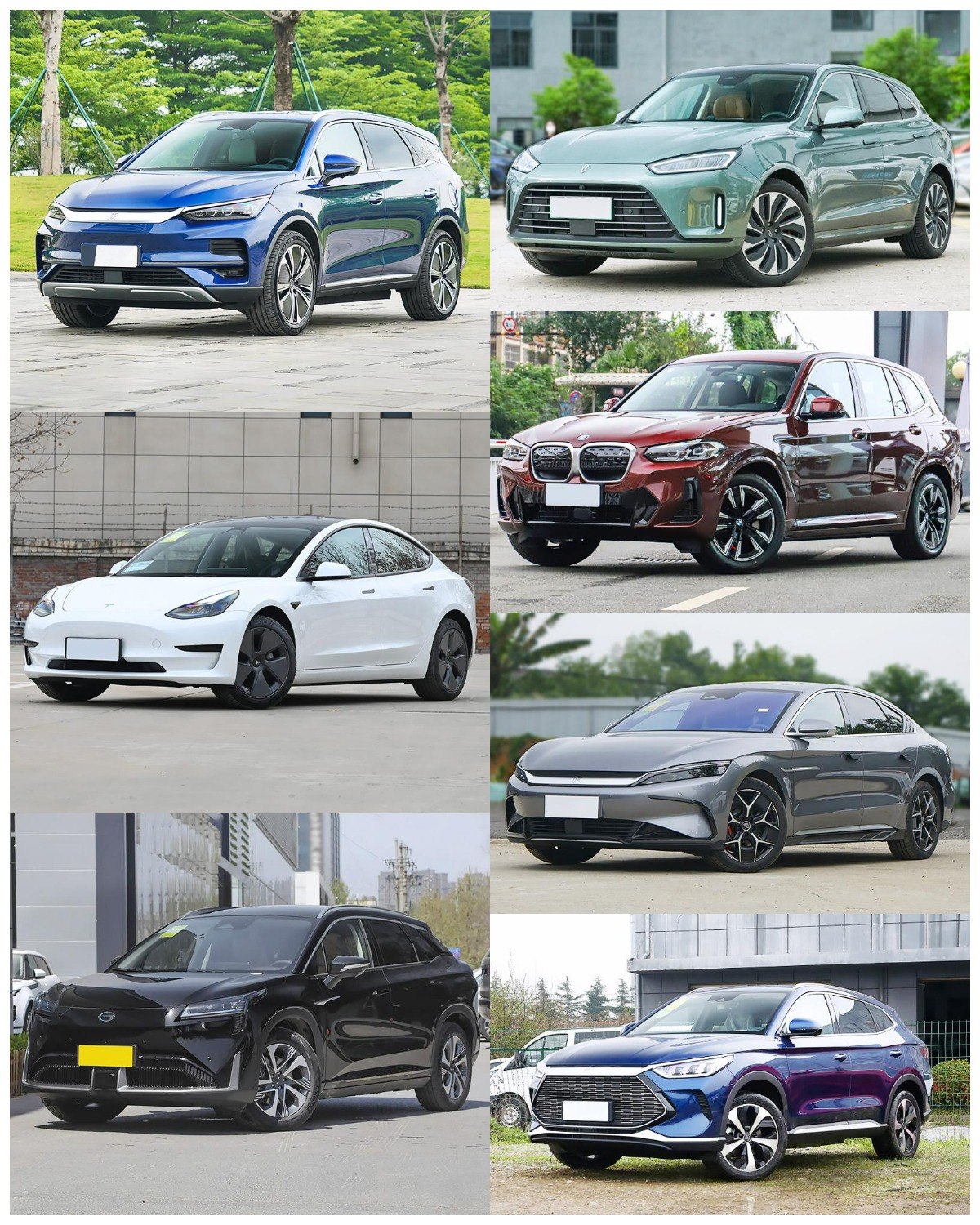
What are the different types of electric cars?
When talking about electric cars, we usually refer to three main types of electric vehicles: hybrid electric vehicles (HEV), plug-in hybrid electric vehicles (PHEV), and battery electric vehicles (BEV).
Battery Electric Vehicle (BEV)
BEVs are also known as all-electric vehicles (AEVs). Electric vehicles using BEV technology run entirely on battery-powered electric drivetrains. The electricity used to power the vehicle is stored in a large battery pack that can be charged by plugging it into the grid. The charged battery pack then powers one or more electric motors to run the electric vehicle.
The main components of BEV: Electric motors, inverters, batteries, control modules, drive trains
How BEV works
The power of the electric motor is converted from the DC battery to AC. When the accelerator is pressed, a signal is sent to the controller. The controller regulates the speed of the vehicle by changing the frequency of the AC power from the inverter to the motor. The motor is then connected and through the gears causes the wheels to turn. If the brakes are applied, or the EV slows down, the motor turns into an alternator and generates power, which is sent back to the battery.
Hot selling All-electric Vehicles
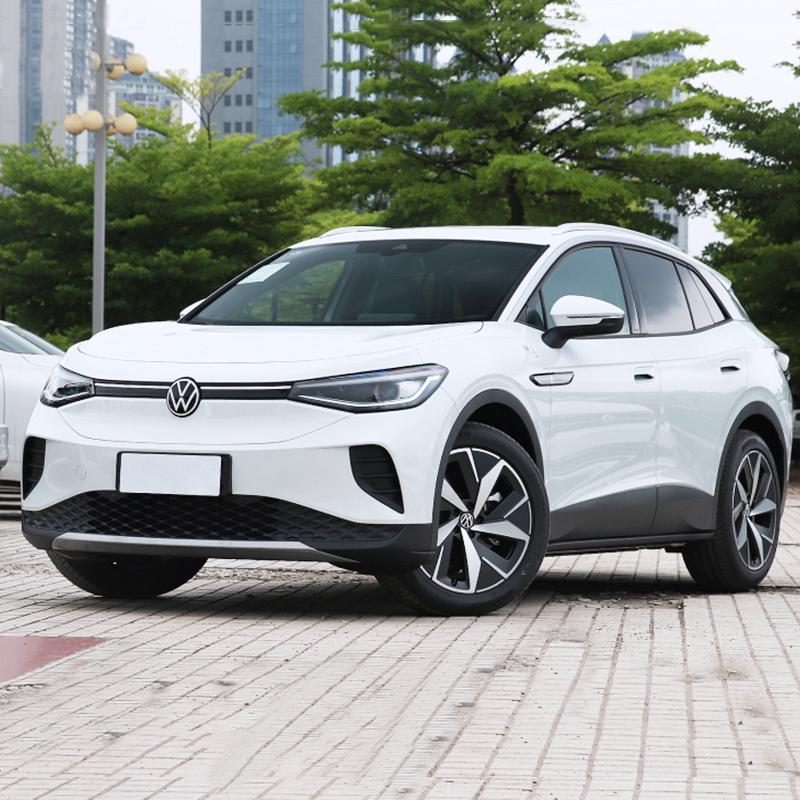
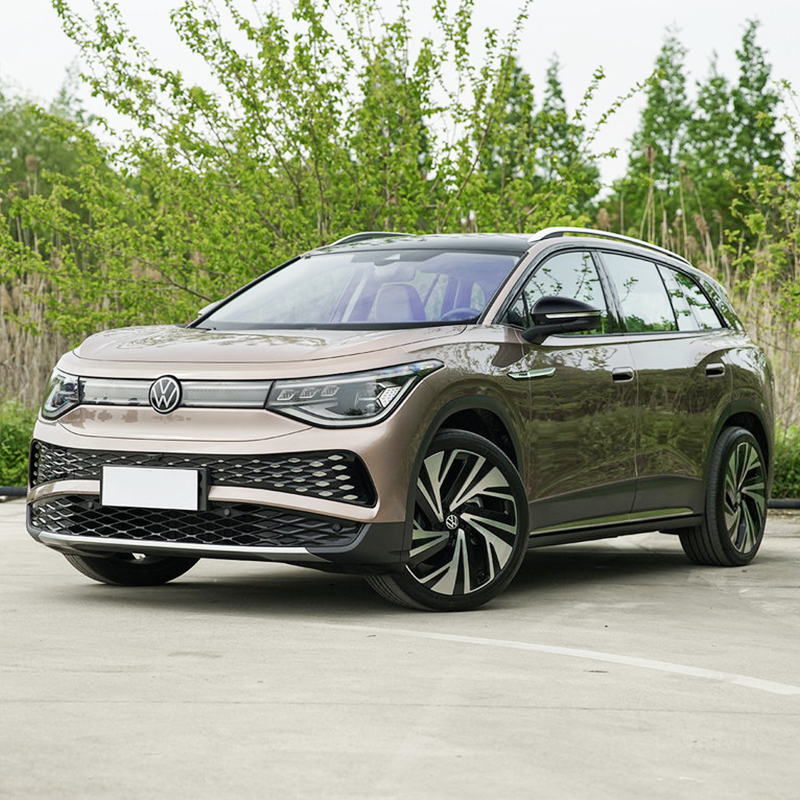
ID.6 X 2022 Electric Car Pure Version
Hybrid Electric Vehicles (HEVs)
HEVs are also known as series hybrids or parallel hybrids. HEVs have both an engine and an electric motor. The engine gets its energy from the fuel and the motor gets its electricity from the battery. The transmission is simultaneously rotated by the engine and the electric motor. Then, drive the wheels.
Main components of a hybrid vehicle
Engine, electric motor, battery pack with controller and inverter, fuel tank, control module
How a hybrid car works
The fuel tank provides energy to the engine like a normal car. The battery runs on the electric motor. The engine and electric motor can turn the transmission at the same time.
Plug-in Hybrid Electric Vehicles (PHEVs)
Use an internal combustion engine and batteries that are charged from an external outlet (they have a plug). This means the vehicle's battery can be charged with electricity instead of the engine. PHEVs are more efficient than HEVs but less efficient than BEVs.
Plug-in hybrid vehicle main components
Electric motor, engine, inverter, battery, fuel tank, control module, battery charger (vehicle model)
How a plug-in hybrid works
The PHEV starts in all-electric mode and uses electricity until the battery pack is depleted. Once the battery is depleted, the engine takes over and the vehicle operates as a conventional non-plug-in hybrid. PHEVs can be charged by plugging into an external power source, the engine, or regenerative braking. When braking is applied, the electric motor acts as a generator, using energy to charge the battery. The power of the engine is supplemented by an electric motor; therefore, a smaller engine can be used, increasing the fuel efficiency of the car without compromising performance.
Why choose the new energy vehicles?
Full of joy
The electric motor is responsive and provides ample acceleration when you need it. This is helpful when driving onto the highway, overtaking other vehicles, or accelerating from traffic lights.
Keep quiet
You'd be amazed at how good it is to drive a car that "wows" when accelerating. Many EV owners find their daily commute less stressful.
Emission reduction
Plug-in hybrid electric vehicles (PHEVs) reduce tailpipe emissions. Battery Electric Vehicles (BEVs) are completely exhaust-free. As more and more electric cars appear on our streets, our pollution and smog will decrease. This would have significant health benefits, especially in densely populated and environmentally unfavorable areas.
Climate-friendly
Even if you charge an EV with electricity from fossil fuels, it releases fewer greenhouse gases into the environment. This reduces our dependence on petroleum products because it uses these energy sources so efficiently. With the advent of more renewable energy sources, total EV emissions will approach zero.
Easy to maintain
Electric motors are a proven technology with few moving parts. This means that an EV's powertrain is generally maintenance-free, efficient, and requires no oil changes.
How to choose the right electric cars?
Although electric cars are still in their infancy compared to fossil fuel vehicles, as time goes on, more options are available on the market. So, if you're considering buying an electric car, where do you start?
Choosing the right electric car is a little different than buying a traditional gasoline-powered car or a gasoline-electric hybrid. You need to think more about the range and charging than a gas car, and you need to learn the language of electric cars.
1. Car buying budget
Whether you are buying a fuel car or a new energy car, you must consider the budget before buying a car. The budget determines what car you can buy. Otherwise, although the car you like is very good, there is nothing you can do if your wallet does not support it, so before choosing a car The first consideration is budget. When choosing a model, you can quickly determine 4 to 5 models according to your own car purchase budget, and then choose from these models later, and screen them based on appearance, use, configuration, and reputation.
2. Pure Electric or Hybrid?
Each model works differently, and it's important to choose an EV that fits your lifestyle and beliefs:
BEVs are ideal for eco-friendly drivers looking to drastically reduce their monthly fuel costs. They're the new world of cars, and that's where we're all headed in 10-15 years.
PHEVs are aimed at those who want to dip their toes into the EV world, but still, need a safety blanket of petrol/diesel engines to fall back on.
Fuel savings are possible, but require rigorous daily charging of the battery. High-mileage drivers will see lower fuel savings because the internal combustion engine will be used more.
HEVs are often advertised as "self-charging hybrids" that cannot be plugged in and don't benefit from cheap electricity. HEVs are similar to conventional cars, but only electric at low speeds and short distances.
3. How much battery life do I need?
Once you've figured out which type of EV is best for you, battery range is the next thing to look at in EVs.
HEVs run on petrol/diesel, so you just top up as usual and range isn't an issue.
PHEVs typically have a battery range of 20-40 miles, depending on the model, and you can rely on the gasoline/diesel engine when the battery runs out. So, as with HEVs, the range can be managed by refueling. However, if you want to stay eco-friendly and save money, go for a PHEV with as much battery range as possible.
On the other hand, BEVs are only powered by batteries, and you have to consider range before choosing a car.
4. How is the performance?
In a conventional car with gears - either manual or automatic - there is some delay when changing gears while accelerating.
In an all-electric BEV with no gears at all, the power of the electric motor is instant and constant. This means there is no lag when accelerating, and power is applied very smoothly from the battery.
That's why many electric cars have amazing acceleration. For example, the Tesla Model 3 Performance's 0-60 mph takes just 3.1 seconds!
If sheer power and acceleration are important to you, a BEV might just be the ticket.
Electric motors are also used in PHEVs and HEVs to enhance the performance of conventional engines, such as when accelerating.
Just check the acceleration stats of various electric models to fine-tune your choice.
5. Configuration
As for the configuration of the vehicle, I believe that many riders pay more attention to it. After all, the current car is based on "technology and intelligence". If the configuration is too low, the driving experience will not be good. When choosing a car, pay attention as much as possible to the electric motor (maximum power, maximum torque, etc.) of the new energy vehicle, the structural strength of the body material, airbags, waterproof level, battery standard level, etc. In addition, in terms of smart configuration, it is best to have keyless entry, one-button start, PM2.5 car purifier, electric air conditioner, multimedia car system, mobile phone interconnection, and USB interface, because these configurations will It is often used, so it is still necessary.
Buy an electric car
Like most cars, you can buy a new electric car from a dealership, or you can buy a used car from a new car dealership, a used car dealership, or a private party. More and more people can buy a new electric vehicle directly from the automaker, or buy it entirely online and have it delivered to their door.
Chengda provides a one-stop electric vehicle purchase service, where you can get a variety of different new energy vehicles, we have a professional sales team, not sure which one is best for you. Please contact us and we will recommend the most suitable electric vehicle for you according to your needs.